
The Environmental and Wildlife Pressures That Come With Safari Tourism
Safari tourism draws millions of visitors to sub-Saharan Africa every year, and the industry generates billions in revenue. But the sheer volume of that interest creates real strain on the ecosystems it promises to protect. Vehicle congestion around big cat sightings in places like the Masai Mara has become a documented problem. When dozens of Land Cruisers circle a cheetah with cubs, the stress on the animal is measurable. Studies have shown that repeated vehicle disturbances can cause cheetahs to abandon kills, reduce hunting success rates, and alter denning behavior.
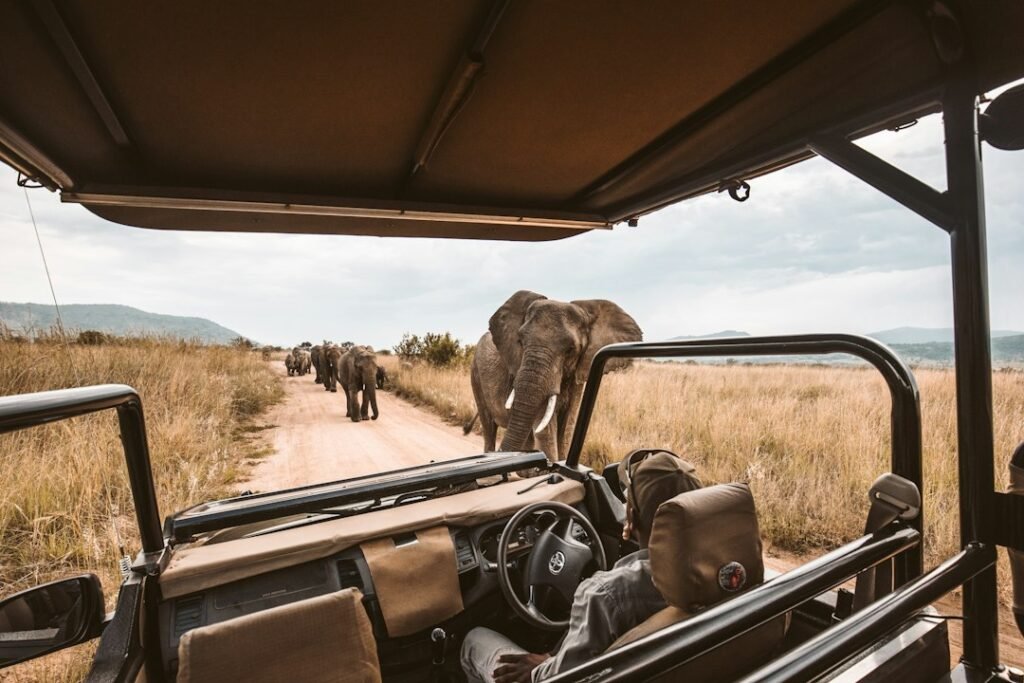
Beyond wildlife disturbance, infrastructure expansion is a growing issue. New lodges, airstrips, and road networks cut through habitats and migration corridors. In some conservancies, construction has outpaced genuine conservation planning. Water usage is another concern that rarely gets discussed in glossy brochures. High-end camps in semi-arid regions can consume thousands of liters per guest per day, pulling from the same sources that local communities and wildlife depend on.
Carbon footprint is also worth acknowledging honestly. Getting to East or Southern Africa from North America or Europe typically requires long-haul flights, often with connections. The carbon cost of a single safari trip can be substantial, and the industry has been slow to develop credible offset strategies that go beyond tree-planting campaigns.
Community Impact and Who Actually Benefits From Safari Revenue
One of the most persistent criticisms of safari tourism is the question of who profits. Historically, large portions of safari revenue have flowed to foreign-owned operators, international hotel chains, and overseas booking platforms rather than to the local communities living alongside wildlife. When local people see little tangible benefit from conservation, the incentive to protect wildlife over, say, expanding farmland or grazing territory weakens significantly.
Land rights are at the core of this tension. In several African countries, communities were displaced from ancestral territories to create national parks and game reserves in the colonial era. Some of those injustices have never been fully addressed. Tourism that ignores this history and treats local people as backdrop rather than stakeholders is ethically compromised, regardless of how beautiful the experience is.
That said, the picture is not uniformly bleak. Community-owned conservancies in Kenya and Tanzania have shown that when local people control tourism revenue and land decisions, both wildlife populations and human livelihoods improve. Models like these represent what responsible safari travel can look like in practice. A well-structured trip, such as a Masai Mara luxury safari from Nairobi run by operators with genuine community partnerships, channels money directly into local economies and conservation programs.
How to Travel More Responsibly on Safari in 2026
Awareness of these problems does not mean avoiding Africa altogether. It means being a more deliberate traveler. Before booking, ask operators specific questions: What percentage of staff are hired locally? Does the camp have formal agreements with surrounding communities? Are wildlife viewing protocols enforced with guides?
Choose operators who are transparent about their conservation fees and can show where the money goes. Camps certified by the Global Sustainable Tourism Council or affiliated with recognized conservancies are a reasonable starting point. Longer itineraries that cover multiple ecosystems, like a Kenya and Tanzania safari tour, can also be more carbon-efficient per day than multiple short trips.
Travel in smaller groups, follow vehicle etiquette around wildlife, and resist the pressure to push guides for closer access to animals. The quality of a safari experience does not improve when a leopard is surrounded by ten vehicles. It does improve when you spend more time observing natural behavior from a respectful distance. That shift in expectations, from spectacle to genuine encounter, is probably the most useful thing a traveler can bring to the bush.